
The Decision Alignment Canvas
Move an important decision from circular debate to explicit commitment. Clarify the owner, test options and tradeoffs, record dissent, and define what would reopen the call.
Frame the decision
Make the question, authority, timing, and boundaries explicit.
Test the options
Surface alternatives, evidence, unknowns, tradeoffs, and dissent.
Commit and communicate
Record the call and make follow-through and reopening conditions clear.
Turn discussion into a durable decision
Your completed PDF is created on this device. Your answers are not uploaded or saved by Melbado.
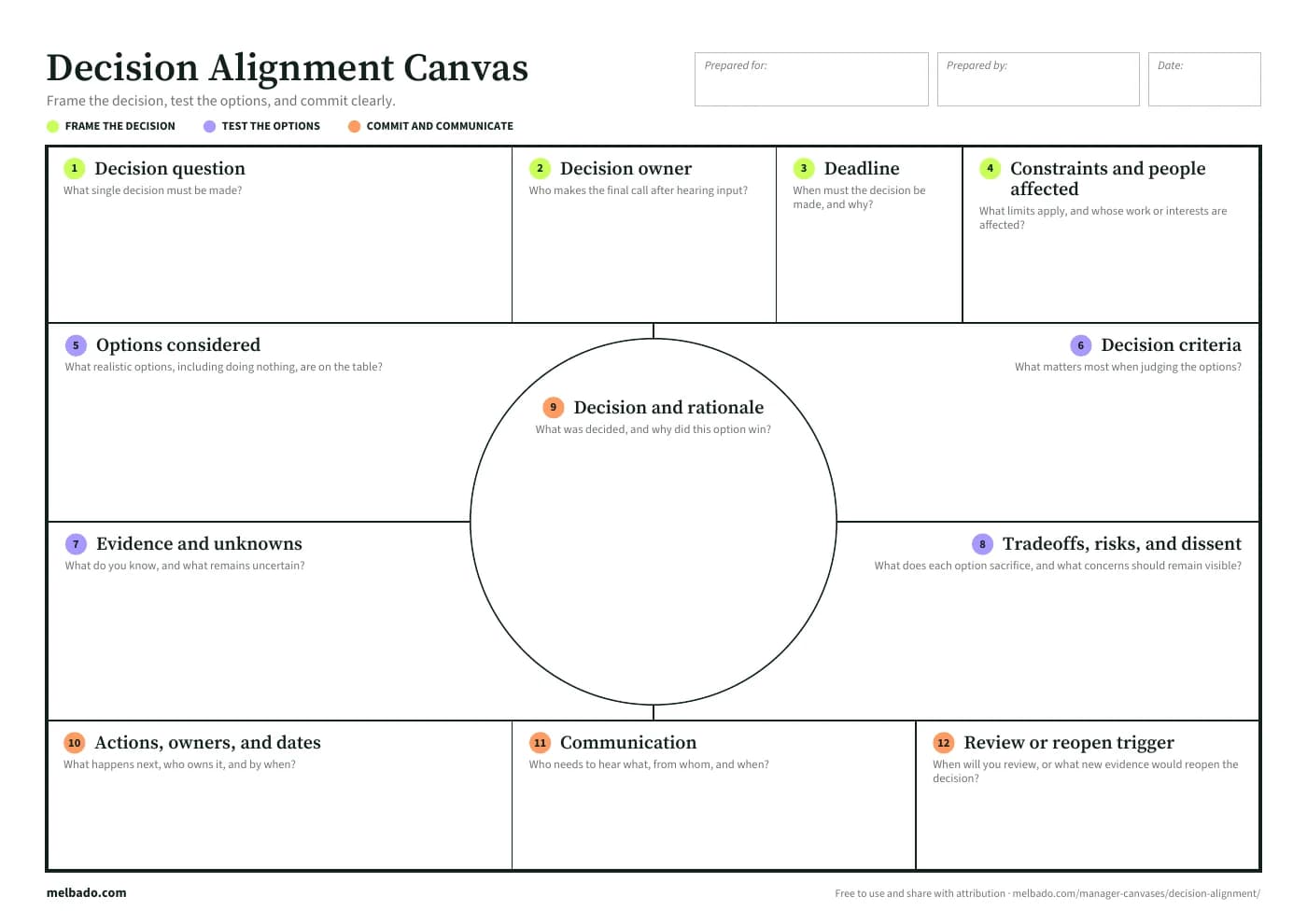
Decision alignment means everyone understands the question, authority, rationale, action, and reopening rule - even when they disagree.
Frame one decision
A vague topic creates endless discussion. Write a question that can produce a clear choice and name the person with final authority.
Test options with explicit criteria
Agree what matters before defending a favorite option. Include doing nothing or delaying when either is genuinely possible.
Preserve useful dissent
Alignment does not require pretending everyone agrees. Record credible concerns so the team can monitor the risk and learn.
Define how the decision can change
A review date or evidence trigger avoids both stubbornness and constant relitigation. Until then, commit to the chosen action.