
The Difficult Conversation Canvas
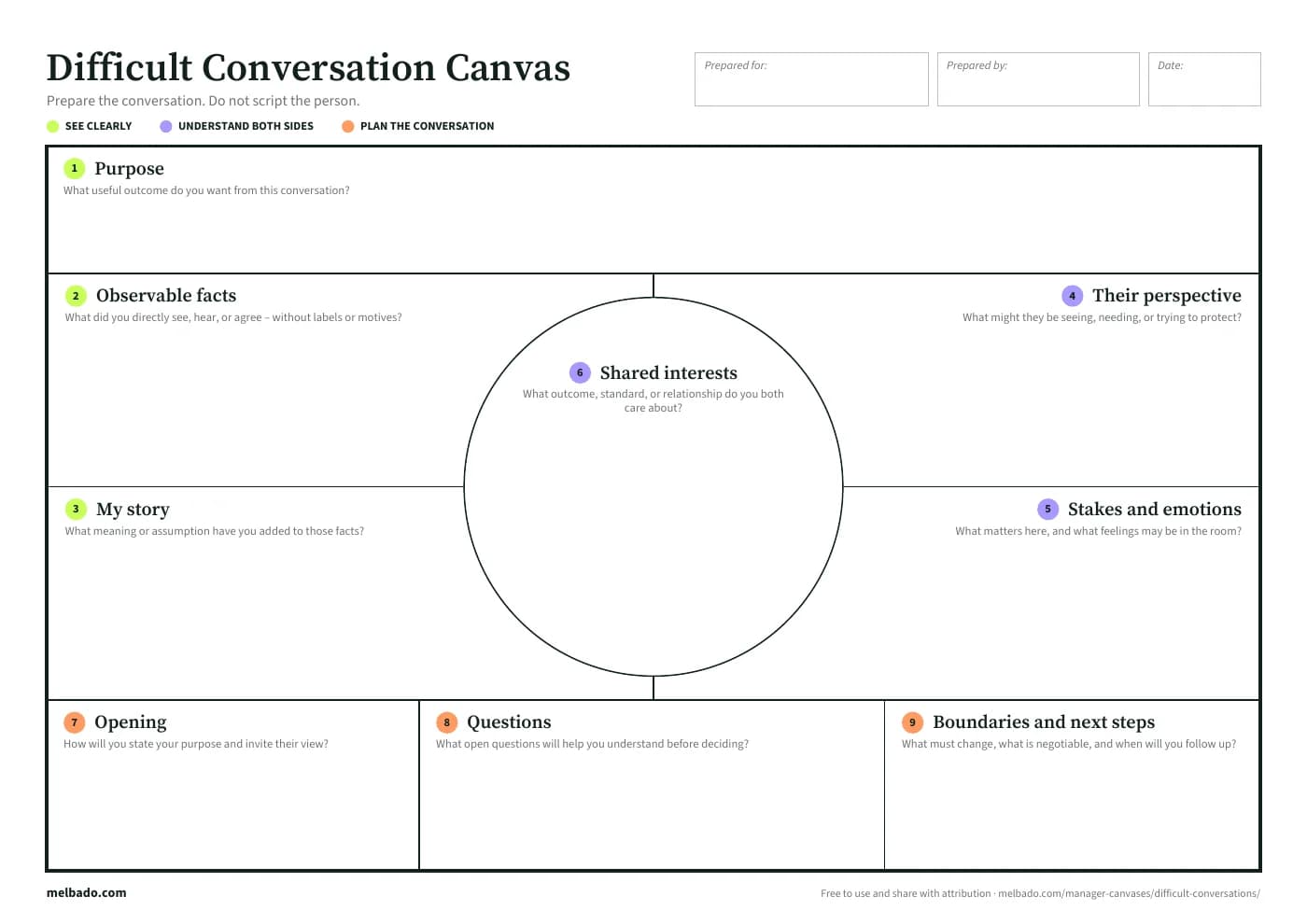
Prepare the conversation without scripting the person. This one-page planner helps you separate facts from assumptions, consider both perspectives, and leave with a clear opening and next step.
See clearly
Separate what happened from what you are telling yourself about it.
Understand both sides
Make room for impact, uncertainty, and a perspective you may not share.
Plan the conversation
Prepare a grounded opening, genuine questions, and a concrete finish.
Take the plan into the room
Your completed PDF is created on this device. Your answers are not uploaded or saved by Melbado.
Some situations need more than a conversation plan
Pause and seek appropriate help if this involves harassment, discrimination, retaliation, violence, a serious power imbalance, legal concerns, or immediate risk. Depending on the situation, that may mean HR, a union representative, legal advice, safeguarding support, emergency services, or another qualified professional.
A difficult conversation is easier to enter when you know what is fact, what is interpretation, and what you still need to learn.
Start with a useful purpose
A good purpose describes what you want to understand, improve, decide, or repair. Proving you are right is a verdict; agreeing a reliable next step gives both people somewhere to go.
Keep facts observable
Write what a camera or recording could capture: dates, words, actions, and agreements. Put conclusions about intent in My story so you do not present an assumption as evidence.
Prepare questions, not answers for them
Your guess about their perspective is only a prompt for curiosity. Let their actual answer replace your hypothesis during the conversation.
Finish with a concrete next step
Name what needs to happen, who owns it, and when you will check back. Describe the behavior or condition required, not the other person's character.